
Concrete vs. Asphalt Driveway in Jersey Village, TX
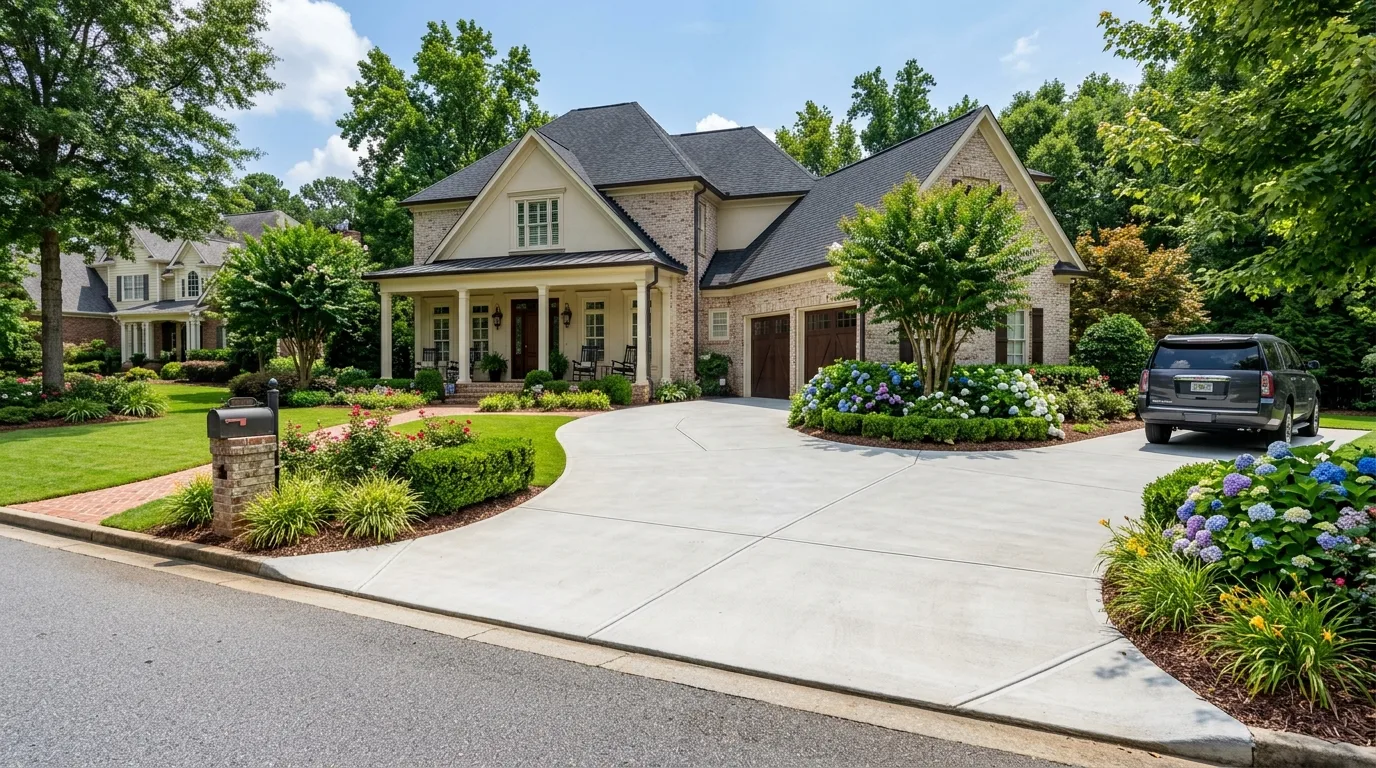
If you’re replacing a driveway in Jersey Village, the concrete vs. asphalt question comes down to a few factors specific to the Houston Gulf Coast climate — factors that tip the balance more decisively toward concrete here than in cooler, drier parts of the country. Texas summer heat, Black Gumbo clay soil, and the long driveway lifespan difference between the two materials create a total cost of ownership calculation that most homeowners don’t run before making the decision. This post covers the key comparison points for Jersey Village specifically: upfront cost, heat performance, longevity, maintenance burden, and which material handles Harris County’s soil better.
Concrete Driveway Estimates in Jersey Village
Jersey Village Concrete installs driveways built for Houston's heat and Harris County clay. Free estimates — call (888) 376-0955.
Why Material Choice Matters in Jersey Village
The material choice for a driveway in Jersey Village is more consequential than in most markets because of two local factors. First, Houston’s extreme summer heat — average July highs of 94–95°F with heat index values regularly exceeding 105°F — affects asphalt far more than concrete. Second, Harris County’s Black Gumbo clay soil moves significantly with the wet-dry cycle, and the two materials respond to that movement differently. Understanding these factors changes the calculus significantly from a generic “asphalt is cheaper” conclusion.
Types of Driveway Materials: What You’re Choosing Between
Standard concrete driveway: Gray brushed-finish concrete, 4-inch thickness for residential use. In Jersey Village, run $6–$10 per square foot installed. A two-car driveway (400–600 sq ft) costs $4,000–$7,500. Service life of 25–40 years with proper base prep and maintenance.
Decorative concrete: Stamped, colored, or exposed aggregate concrete. Runs $10–$20 per square foot in Jersey Village. Same service life as standard concrete; the decorative finish requires resealing every 2–3 years to maintain appearance.
Standard asphalt driveway: Hot-mix asphalt, typically 2–3 inches thick over a compacted base. Installed for $3–$5 per square foot in the Houston market — significantly cheaper upfront than concrete. Service life of 10–20 years before major resurfacing is required.
Practical Comparison: 5 Factors That Matter Most in Jersey Village
- Heat performance: Asphalt softens in sustained high temperatures and can develop ruts under vehicle loads during Houston’s hottest months. A dark asphalt driveway in Jersey Village in August can reach surface temperatures of 150–160°F — enough to soften the binder and leave tire marks. Concrete remains rigid in heat and doesn’t soften, though it reflects more heat toward the home. Lighter-colored concrete finishes can be specified to reduce surface temperatures.
- Clay soil performance: Both materials are affected by Black Gumbo clay movement. Concrete handles clay movement better than asphalt in most scenarios because its rigidity distributes the load from soil swelling and contraction more evenly. Asphalt’s flexibility, which is marketed as an advantage in freeze-thaw climates, is actually a disadvantage in clay soil environments where differential settlement creates permanent depressions rather than temporary deflections.
- Maintenance burden: Asphalt requires sealing every 2–3 years and resurfacing every 10–15 years to maintain its structural integrity. Concrete requires sealing every 2–3 years for appearance and surface protection but rarely needs resurfacing if it was installed correctly. Over a 30-year period, the maintenance cost differential is significant in concrete’s favor.
- Longevity: A properly installed concrete driveway in Jersey Village lasts 25–40 years. A properly maintained asphalt driveway in Houston’s climate lasts 10–20 years before major resurfacing is necessary. On a 30-year total cost basis, concrete’s higher upfront cost is typically offset by longer service life and lower maintenance.
- Appearance: Concrete offers significant aesthetic flexibility — stamping, coloring, exposed aggregate — that asphalt does not. For Steeplechase and Jersey Lake Estates homes where curb appeal matters to property value, the aesthetic range of concrete is an advantage.
How It Works: Total Cost Over 30 Years
For a standard 500 sq ft two-car driveway:
Concrete: $4,500–$6,000 installed + $200–$300 every 3 years for sealing = approximately $6,500–$9,000 total over 30 years with no major resurfacing required.
Asphalt: $1,800–$3,000 installed + $200–$300 every 3 years for sealing + $2,000–$4,000 for resurfacing at year 12 + potential second resurfacing at year 24 = approximately $7,000–$13,000 total over 30 years.
The total cost ranges overlap, but the bottom of the concrete range is comparable to the middle of the asphalt range — and the asphalt calculation assumes maintenance is performed on schedule, which many homeowners don’t do. Asphalt that isn’t regularly sealed deteriorates significantly faster, compressing the 15-year resurfacing window to 8–10 years in Jersey Village’s heat.
Jersey Village Concrete Driveways — Built for Houston's Climate
Call (888) 376-0955 for a free estimate. Proper base prep for Harris County clay soil is standard on every project.
Cost Factors in the Jersey Village Market
Installation cost: Asphalt is $3–$5/sq ft; standard concrete is $6–$10/sq ft; decorative concrete is $10–$20/sq ft.
Demo cost: Both materials have similar demo costs — $2.50–$5 per square foot to remove and haul away an existing surface.
Base preparation: Both require proper base preparation for Harris County’s clay soil. Asphalt requires 6+ inches of compacted base (more than typical for concrete) because it flexes under load and needs a more rigid foundation to prevent rutting in warm-weather conditions.
Maintenance timeline: Concrete sealed every 2–3 years; asphalt sealed every 2–3 years plus resurfacing every 10–15 years.
Frequently Asked Questions
Is concrete or asphalt better for hot climates like Jersey Village?
Concrete is significantly better suited to Houston’s climate than asphalt. High temperatures soften asphalt binder, leading to surface deformation under vehicle loads — a common problem on Jersey Village driveways in July and August. Concrete remains dimensionally stable in heat and doesn’t rut. The tradeoff is that concrete’s thermal expansion in extreme heat requires adequate control joints to prevent random cracking, which experienced contractors design into every pour.
Which material handles Jersey Village’s clay soil better?
Both concrete and asphalt are affected by Black Gumbo clay movement, but concrete handles it better in most cases. Concrete’s rigidity means soil movement is transmitted as cracking — visible and repairable. Asphalt’s flexibility means soil movement is transmitted as permanent deformation — rutting and depression that affects the surface’s usability and appearance. In a freeze-thaw climate, asphalt’s flexibility is an advantage. In Jersey Village’s clay-driven movement environment, concrete’s rigidity is generally the better outcome.
Can I install concrete over existing asphalt in Jersey Village?
Installing new concrete over existing asphalt (asphalt overlay with concrete cap) is generally not recommended for residential driveways in Jersey Village. The asphalt base creates an unstable foundation for concrete, and the interface between the two materials tends to fail as Jersey Village’s clay soil moves beneath them. Full removal of the existing asphalt and installation with proper base preparation produces a dramatically better and longer-lasting result.
Ready for a Concrete Driveway in Jersey Village?
Call Jersey Village Concrete at (888) 376-0955 for a free, honest estimate. We explain the full picture before any work begins.
Related: