
Best Time to Pour Concrete in Jersey Village, TX
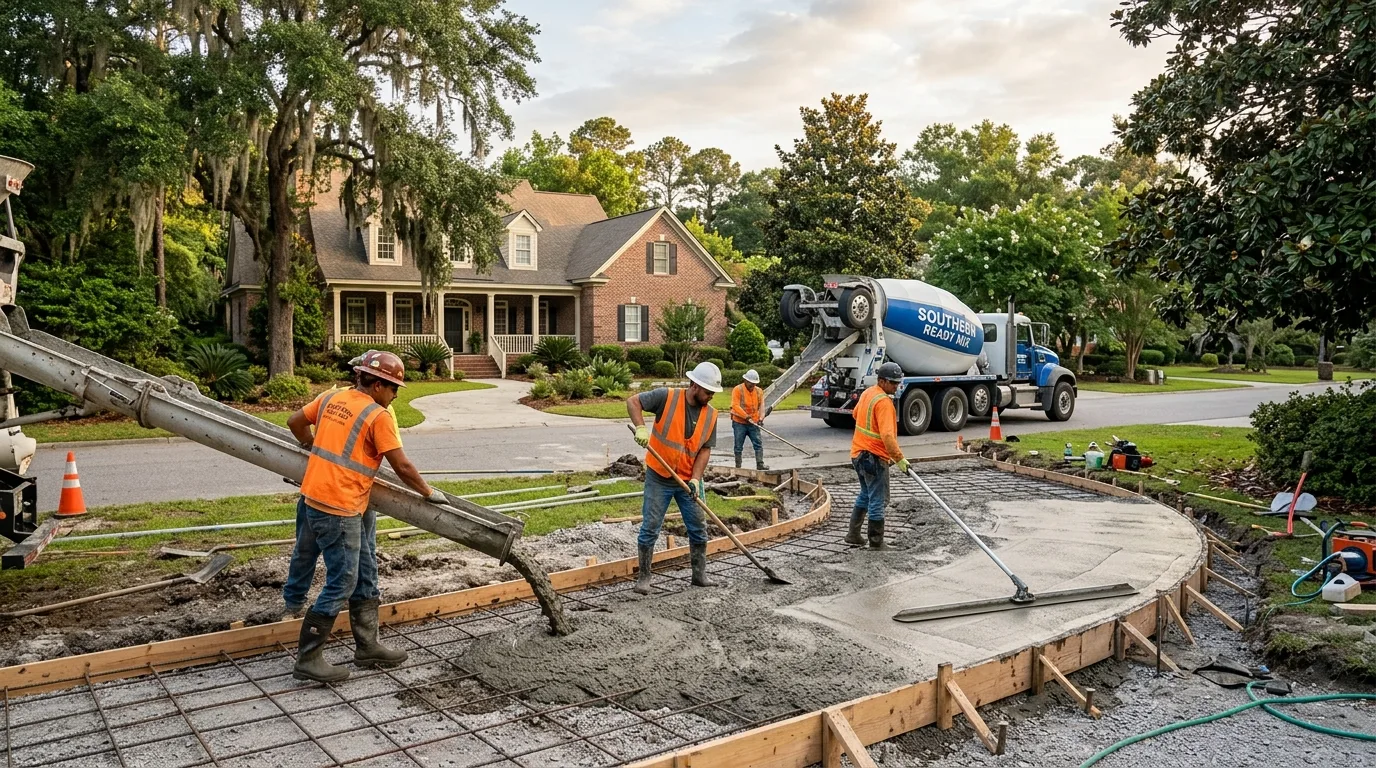
Jersey Village averages 54 inches of rain per year, sees summer highs of 94–95°F, and sits in a humidity band that stays above 70% almost year-round. That climate is beautiful for outdoor living — and genuinely challenging for concrete. The best time to pour concrete in Jersey Village is not the same answer you’d get for Dallas or Austin, because Houston’s Gulf Coast humidity and heat create a curing window that’s narrower than most contractors acknowledge. In this post, we cover the ideal seasons, how to manage summer pours, what winter means for concrete in Jersey Village, and how to read the forecast before scheduling your project.
Ready to Schedule Your Jersey Village Concrete Project?
Call Jersey Village Concrete at (888) 376-0955. We schedule pours around Jersey Village's weather conditions for best results.
Why Timing Matters for Concrete Jersey Village Homeowners
Concrete cures through a chemical reaction called hydration — water reacts with cement to form the crystalline bonds that give concrete its strength. That reaction is sensitive to temperature and humidity. Too hot and dry, and the surface loses moisture before the reaction completes, resulting in a weak, dusty surface layer that spalls under traffic. Too cold (below 40°F), and hydration essentially stops, leaving concrete that never reaches design strength. In Jersey Village, the cold extreme almost never occurs — but the hot-and-dry extreme is a real risk from May through September.
The American Concrete Institute (ACI) defines the optimal concrete curing temperature range as 50°F–75°F. Jersey Village spends relatively little time in that range during the summer months. Understanding when you’re inside that window — and how to manage pours when you’re outside it — is the difference between concrete that performs for 30 years and concrete that starts showing distress in year five.
Seasonal Concrete Pouring Conditions in Jersey Village
Spring (March–May): The Primary Ideal Season Spring is the best season for concrete pours in Jersey Village. Temperatures typically run 65–80°F during the day, night temperatures stay above 50°F, and humidity — while always present — is less oppressive than summer. Concrete placed in March or April cures steadily and reaches design strength within the standard 28-day window without special accommodations. Spring also tends to have more predictable weather windows — you can look ahead 5–7 days and book a pour without the daily thunderstorm risk that dominates June and July.
Fall (September–November): The Secondary Ideal Season Fall is nearly as good as spring for concrete in Jersey Village. September can still see 90°F-plus temperatures, but October and November typically land in the 70–80°F range with lower humidity than spring. The dry season arriving in October also reduces the risk of rainfall interrupting a pour or washing the surface before it sets. For stamped concrete projects and larger commercial slabs where the pour window matters most, fall scheduling is often the professional’s preferred choice.
Summer (June–August): Manageable With Proper Techniques Summer concrete is possible in Jersey Village — experienced contractors pour concrete year-round here — but it requires specific accommodations that add cost and complexity. Evaporation retardant is applied to the concrete surface immediately after finishing to slow moisture loss from the 95°F-plus heat. Pours are scheduled before 10am to take advantage of the cooler morning hours; afternoon temperatures in July and August make late-day pours inadvisable for large areas. Curing blankets or wet burlap are used to maintain surface moisture during the first 7 days of curing.
Winter (December–February): No Freeze Risk, Slower Curing Jersey Village rarely freezes — temperatures drop below 32°F only a handful of days per year on average. This means winter concrete pouring continues year-round without the freeze risk that halts concrete work in most of the country. The tradeoff is slower curing: at 50°F, hydration proceeds at roughly half the rate it does at 70°F, meaning 28-day design strength may not be reached until 40–45 days after the pour. Contractors working in Jersey Village’s winter market account for this extended timeline in scheduling and traffic restrictions.
Types of Concrete Work and Their Seasonal Preferences
Concrete driveways: Driveways carry vehicle loads — the concrete needs to reach full design strength before regular traffic begins. Spring and fall pours minimize the special curing requirements and get driveways to full strength on schedule. Summer pours with proper curing management work well; plan for early morning scheduling.
Concrete patios: Patios see lighter loads than driveways. The timing consideration here is more about the decorative finish — stamped concrete surfaces are especially sensitive to premature drying in summer heat, which can affect pattern sharpness and color uniformity. Fall is the preferred season for stamped concrete patios in Jersey Village’s Steeplechase and Jersey Lake Estates neighborhoods.
Concrete slabs for structures: Structural slabs need to cure fully before any framing or building loads are applied. Scheduling the pour in spring or fall gives the cleanest curing window and the most predictable results.
Concrete repair: Crack fills and patches can be done year-round in Jersey Village given the mild climate. Surface resurfacing projects benefit from fall or spring scheduling to avoid the premature moisture loss that summer heat causes in polymer-modified repair mortars.
Practical Curing Tips for Jersey Village Homeowners
- Keep new concrete moist for 7 days. Wet burlap, plastic sheeting, or curing compound all work — the goal is preventing the surface from drying faster than the interior. In summer, curing compound alone may not be sufficient for larger pours.
- Keep vehicles off for at least 7 days. Foot traffic can resume at 24–48 hours; vehicle traffic should wait a full week minimum, and heavy vehicles should wait the full 28-day cure period.
- Don’t seal too early. Concrete sealer is typically applied after the 28-day cure period in Jersey Village. Applying it earlier can trap moisture and interfere with full strength development.
- Watch the forecast. A heavy rain within 4 hours of a concrete pour can wash the surface layer and damage the finish. Your concrete contractor should check the radar before scheduling any large pour in Houston’s summer storm season.
Schedule Your Jersey Village Concrete Pour This Season
Jersey Village Concrete plans pours around weather and site conditions. Call (888) 376-0955 for scheduling.
Cost Factors Related to Season
Seasonal concrete pouring in Jersey Village doesn’t dramatically change the base price — the $6–$14 per square foot range for concrete driveways applies year-round. What changes is the cost of accommodations for difficult conditions. Summer pours typically add 5–10% to project cost when evaporation retardant, extended curing measures, and early morning scheduling (with associated premium concrete delivery windows) are required. Fall and spring pours in the optimal temperature range generally proceed without these accommodations.
If your project has flexibility in timing, scheduling a large decorative concrete project in October or November will typically get you the cleanest result at the base price. If your timeline requires a summer pour, working with a contractor who has specific experience with Houston summer concrete is worth more than saving a few hundred dollars on price.
Frequently Asked Questions
What is the ideal temperature for pouring concrete in Jersey Village?
The ACI recommends a concrete placement temperature of 50°F–75°F for optimal curing. Jersey Village spends most of the year above this range, but spring and fall mornings often hit this window. Summer morning temperatures of 80–85°F are manageable with evaporation retardant and proper curing measures. The key is avoiding the combination of high temperature, low humidity, and wind — that combination evaporates surface moisture faster than even experienced crews can compensate for.
Can you pour concrete in July in Jersey Village?
Yes — experienced contractors pour concrete throughout Houston’s summer. The keys are early morning scheduling (before 10am), evaporation retardant applied as soon as the concrete is placed, curing blankets or wet burlap for the first 7 days, and avoiding afternoon pours during the hottest hours. Stamped concrete and decorative finishes are harder to manage in extreme heat because the stamping window is shortened. For large decorative projects, consider scheduling in fall if timing allows.
Does Houston’s humidity help or hurt concrete curing?
Humidity helps concrete curing more than most people realize. High humidity slows surface moisture loss, which is exactly what you want during curing. The problem in Jersey Village isn’t high humidity per se — it’s the combination of high heat and high humidity creating an oppressive mix that can stress fresh concrete pours, especially when afternoon thunderstorms threaten. The challenge is managing that combination, not fighting the humidity itself.
Jersey Village Concrete — Scheduled for Your Best Result
Call (888) 376-0955 to discuss your project timeline. We'll recommend the optimal pour window for your Jersey Village location.
Related: