
New Construction Concrete in Jersey Village: Builder's Guide
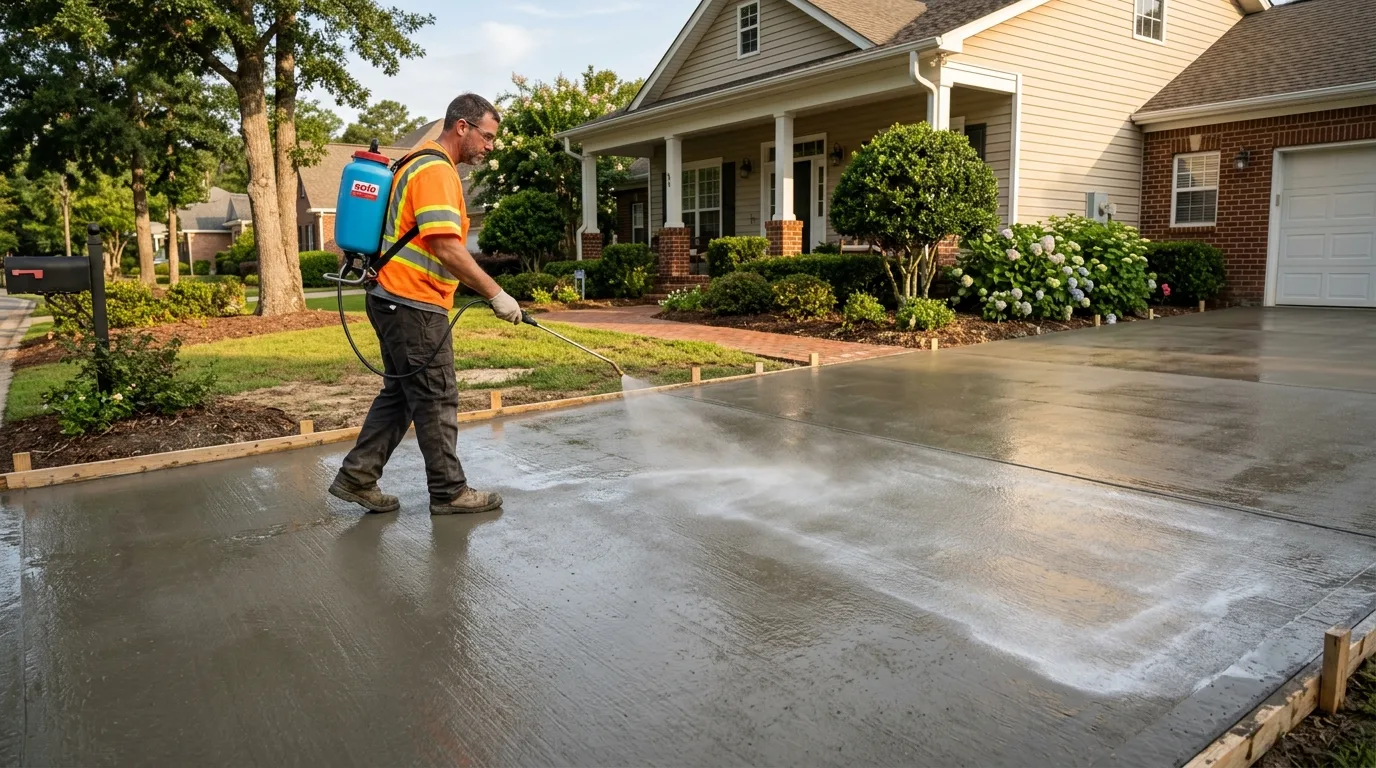
New construction concrete in Jersey Village sets the foundation — literally — for everything that follows. A slab foundation, driveway, and flatwork installed to proper specifications on Harris County’s clay soil will serve the property for 30–50 years. The same elements installed without proper subgrade management, adequate reinforcement, or correct drainage design will generate repair calls within a decade. For builders, developers, and homeowners undertaking new construction in Jersey Village, understanding the local concrete standards — soil management, permit compliance, seasonal scheduling, and contractor qualifications — is the difference between a project that finishes clean and one that generates callbacks. This post covers what you need to know for new construction concrete in Jersey Village in 2026.
New Construction Concrete in Jersey Village?
Jersey Village Concrete delivers permitted, spec-compliant flatwork for new builds. Call (888) 376-0955.
Why New Construction Concrete Is Different in Jersey Village
New construction concrete in Jersey Village involves challenges that don’t exist in most of the country. The Black Gumbo clay soil that underlies the entire city has a shrink-swell index that structural engineers account for in foundation design — but that the general contractor also needs to manage during site work, grading, and flatwork installation. Getting the site work right before the concrete is poured is as important as the concrete itself, and the City of Jersey Village’s permit requirements exist precisely to enforce minimum standards that protect the investment of builders and buyers alike.
The three-way intersection of expansive clay, Houston’s 54 inches of annual rainfall, and the city’s 60-day permit expiration windows creates a scheduling discipline that Jersey Village concrete projects demand. Permits can’t be pulled speculatively and allowed to expire while site conditions improve — the 60-day clock on paving permits means that project sequencing needs to be tight, and contractors need to be ready to execute when permits are issued.
Types of New Construction Concrete in Jersey Village
Residential slab foundation: Post-tensioned or stiffened slab, engineered for the home’s footprint, soil conditions, and structural loads. New residential construction in Jersey Village typically uses post-tensioned slabs as the standard approach — the tensioned cables provide resistance to differential clay movement that wire mesh or rebar grids in conventional reinforcement don’t match.
Driveway and approach: New construction driveways in Jersey Village must connect to the public street at a curb cut. The curb cut itself may require a right-of-way permit separate from the paving permit for the driveway. Standard new construction driveway specification: 4-inch minimum concrete, proper base material, drainage slope toward the street.
Sidewalk: New residential construction in Jersey Village often requires sidewalk installation along the street frontage as part of the development permit conditions. Sidewalks must be concrete (not asphalt), match adjacent sidewalk grades, and connect to accessible curb cuts at corners.
Garage slab: Attached garage slabs are typically poured as part of the home foundation slab. Detached garage slabs require a separate building permit through the Vertex Plans portal and must meet minimum slab and drainage specifications.
Exterior flatwork: Patio slabs, pool decks, and walkways are often part of new construction packages. These are paving permits with the 60-day expiration window, and they need to be sequenced appropriately relative to landscaping installation and final grading.
Practical Uses: New Construction Concrete Sequencing
- Foundation first: The home’s slab foundation must be permitted, inspected, and approved before framing can begin. This is the longest-lead-time concrete element on any new build — engineering, permit submission, plan review, and approval can take 4–8 weeks.
- Driveway and approach second: New driveways are typically installed after the home is weather-tight and before final landscaping. The paving permit’s 60-day clock means the permit application should be timed to align with the actual installation schedule, not pulled months in advance.
- Flatwork third: Patios, walkways, and exterior slabs are typically the last concrete elements installed before landscaping — sequenced after final grading is complete and drainage patterns are established.
- Curb cut coordination: Curb cuts that access the public street require right-of-way coordination with the City of Jersey Village. This should be addressed early in the project sequence to avoid delays at the driveway installation stage.
- Inspection scheduling: Each concrete element requires inspection through the Vertex Plans portal. Scheduling inspections as soon as each element is poured and has met minimum cure time avoids delays that stack up when inspections are left until the end of the project.
How It Works: Clay Soil Management in New Construction
Managing Black Gumbo clay soil in new construction is a systematic process, not a single step. Site clearing and grading remove topsoil and establish final grades, but the native clay subgrade is still in place beneath any fill material. Best practice in Harris County new construction includes:
Lime stabilization of the subgrade: For foundation slabs on particularly active clay sites, lime is mixed into the upper layer of native clay to reduce its plasticity. TxDOT uses this approach on road and highway projects throughout Texas. In residential new construction in Jersey Village, it’s an upcharge over standard subgrade preparation but often justified on lots with deep, active clay.
Compacted base material: Four to six inches of crushed limestone base is standard beneath new concrete slabs and flatwork in Jersey Village. The base material provides a stable, well-draining platform that isolates the concrete from clay movement.
Vapor barrier: A polyethylene vapor barrier beneath residential slab foundations reduces upward moisture migration from the clay that can contribute to seasonal moisture fluctuation in the concrete itself.
Drainage design: Final site grading must direct surface water away from all structures — a minimum of 1/8 inch per foot slope away from the foundation on all sides. This is not optional in Jersey Village; it’s the most important soil management tool available and the standard the city’s inspections verify.
Jersey Village New Construction Concrete — Permitted and Compliant
We handle foundations, driveways, flatwork, and permits for new builds. Call (888) 376-0955.
Cost Factors for New Construction Concrete in Jersey Village
New construction concrete in Jersey Village is priced by element:
Residential slab foundation: $6–$14 per square foot for post-tensioned or conventional slab, depending on engineering specifications and thickness. A 2,000 sq ft slab foundation runs $12,000–$28,000 depending on specification.
New driveway: $6–$10 per square foot for standard concrete, $10–$20 per square foot for stamped or decorative. A standard two-car driveway runs $4,500–$9,500 installed.
Sidewalk: $6–$10 per square foot for standard residential sidewalk width (4–5 feet). A standard residential frontage sidewalk (50–100 linear feet) runs $1,200–$5,000 depending on length and width.
Exterior flatwork: $6–$10 per square foot for plain concrete patios; $10–$20 per square foot for stamped. Pool decks and specialty flatwork are priced based on specific design and drainage requirements.
Permit fees for new construction concrete add $200–$600 per permit type depending on scope and project value.
Frequently Asked Questions
What concrete specifications does Jersey Village require for new construction?
Jersey Village enforces minimum construction standards through permit review and inspection. Foundation specifications are typically engineering-driven rather than prescriptive. Paving minimum specifications require concrete that meets standard residential construction quality, proper base preparation, and drainage slope away from structures. For the current specific code requirements, the City of Jersey Village’s building department is reachable through the Vertex Plans portal or at 713-466-2110.
How far in advance should I permit new construction concrete in Jersey Village?
Permit timing depends on the type and complexity. Foundation permits for new residential construction should be applied for as soon as engineering drawings are complete — plan review can take 30 days, and foundation work is typically on the critical path of a new build schedule. Paving permits (driveways, patios, sidewalks) should be applied for 2–4 weeks before the planned installation date — paving permits review quickly (typically 3–5 business days) but have the 60-day expiration window that requires scheduling discipline.
Do I need a separate contractor for the foundation and the flatwork on a new build in Jersey Village?
Not necessarily. Some concrete contractors in Jersey Village handle both foundation slabs and flatwork; others specialize in one or the other. What matters is that your contractor is licensed, carries the required insurance naming the City of Jersey Village as additional insured, and has documented experience with Harris County’s clay soil and the city’s specific permit requirements.
Start Your Jersey Village New Construction Concrete Right
Call Jersey Village Concrete at (888) 376-0955. We deliver foundations, driveways, and flatwork that pass inspection and last for decades.
Related: