
Concrete Patio Maintenance in Jersey Village's Humid Climate
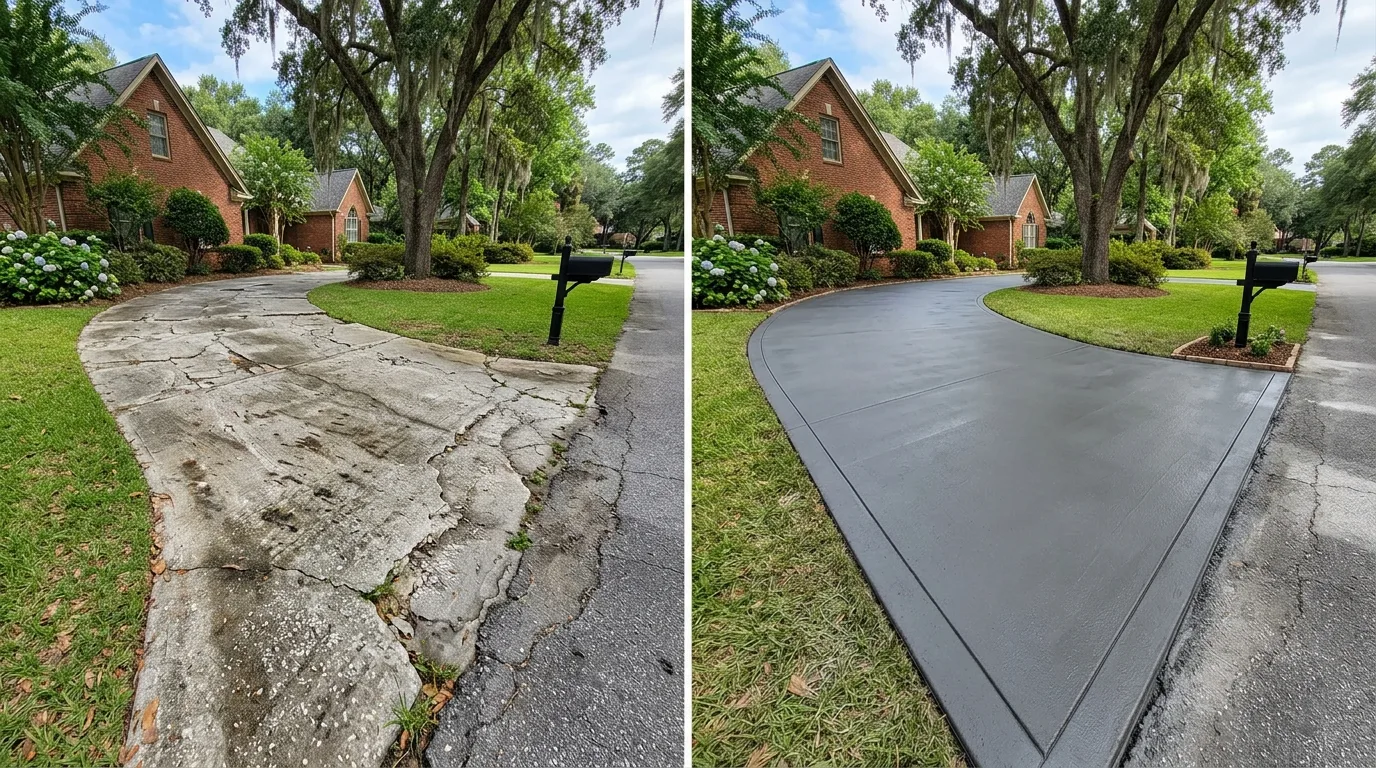
A concrete patio is a long-term investment — a properly maintained patio in Jersey Village can last 30–40 years. An unmaintained one in Houston’s humid subtropical climate will show significant deterioration within a decade. The difference is primarily sealing. Jersey Village’s combination of intense UV radiation, frequent heavy rain, and high year-round humidity creates accelerated surface degradation in unsealed concrete — but these same conditions respond well to a straightforward maintenance schedule. This post covers what Houston’s climate does to outdoor concrete over time, what maintenance your patio actually needs, and how to extend your patio’s life through the seasonal challenges of Harris County.
Need Patio Repair or Maintenance in Jersey Village?
Jersey Village Concrete provides honest assessments and lasting repairs. Call (888) 376-0955.
Why Jersey Village’s Humidity Challenges Concrete Patios
Jersey Village sits at the intersection of several climate factors that affect outdoor concrete more than most of the country. Annual rainfall of 54–55 inches means concrete patios experience wet-dry cycles dozens of times per year — each cycle creates microscopic stress as the concrete absorbs and releases moisture. Summer highs of 94–95°F combined with the Gulf Coast’s 70%+ year-round humidity create conditions where organic growth (algae, mold, mildew) establishes on shaded concrete surfaces within weeks of cleaning. Houston’s summer UV index — among the highest in the continental United States — bleaches and degrades unsealed concrete surfaces visibly within 3–5 years.
For stamped concrete patios, which are especially popular in the Steeplechase and Jersey Lake Estates neighborhoods of Jersey Village, the maintenance stakes are higher. Color hardener pigments in stamped concrete are UV-stable at installation, but the sealer coating them deteriorates with UV exposure. Once the sealer breaks down, the color is exposed directly to UV and rain — and fading accelerates dramatically. Stamped concrete that is resealed on a 2–3 year schedule maintains its appearance for 20–30 years; stamped concrete that goes 5–7 years without sealing may require resurfacing or replacement of the color system.
Types of Maintenance Your Jersey Village Patio Needs
Annual cleaning: Pressure washing or scrubbing with a concrete cleaner removes algae, mildew, dirt, and surface contaminants that degrade the sealer and create a slippery hazard. In Jersey Village’s humidity, shaded patio areas develop green algae growth fastest — typically 2–3 weeks after the last cleaning. An annual thorough cleaning before resealing maintains a clean surface that the new sealer bonds to effectively.
Sealing every 2–3 years: Sealer is the most important concrete maintenance step in Jersey Village. It creates a moisture-resistant barrier that prevents water infiltration, resists UV bleaching on colored surfaces, and makes the surface easier to clean. Penetrating sealers (silane-siloxane) are appropriate for plain concrete; film-forming acrylic or polyurethane sealers are used on stamped concrete to maintain the gloss and color depth of the decorative finish. Budget $200–$500 for professional resealing of a standard patio depending on size.
Control joint maintenance: The saw-cut or tooled control joints in your concrete patio should be inspected annually and resealed with a flexible joint compound when the existing material has deteriorated. Open joints allow water infiltration that accelerates clay soil movement beneath the patio — particularly important in the Fairbanks area of Jersey Village where clay depth is significant.
Crack monitoring and repair: Mark any cracks at their endpoints with a permanent marker and the date. Cracks that grow between wet and dry seasons indicate active soil movement that needs drainage attention. Stable cracks that haven’t grown in 12 months can be filled with flexible polyurethane caulk as a cosmetic fix. Cracks with differential elevation (one side higher than the other) indicate settlement and warrant a professional assessment.
Practical Maintenance Calendar for Jersey Village
- February–March: Annual cleaning before peak pollen season. Inspect control joints and crack endpoints. This is the ideal resealing window — Houston’s dry February and warm March provide optimal conditions for sealer application and cure.
- June–July: Check drainage after the heavy summer rains. Ensure the patio is draining away from the foundation at the designed slope. Clear any debris that has accumulated in drainage channels.
- September–October: Second cleaning if the patio has developed significant algae growth from summer heat and rain. Evaluate whether resealing is needed before the next round of winter rains.
- November–December: Ideal window for stamped concrete resealing if spring application was missed — low humidity and moderate temperatures give sealer the best cure conditions before Houston’s occasional winter cold snaps.
How It Works: Concrete Sealer Application
Sealer application on a concrete patio is a DIY-accessible project for most homeowners, though professional application ensures better coverage and proper product selection. The process starts with a clean, dry surface — concrete should be free of dirt, algae, and any previous sealer that has failed (bubbled, peeled, or turned white). Solvent-based sealers require the surface to be completely dry; water-based sealers have more tolerance for residual surface moisture.
Jersey Village Concrete Patio Maintenance & Repair
We reseal, repair, and assess patios throughout Jersey Village and Harris County. Call (888) 376-0955.
Cost Factors for Concrete Patio Maintenance in Jersey Village
Annual cleaning: $100–$300 for professional pressure washing of a standard 200–400 sq ft patio. DIY with a rented pressure washer runs $50–$80 for equipment plus cleaner product.
Sealing (every 2–3 years): $200–$500 for professional application on a standard patio. DIY sealer product runs $50–$100 per container covering 200–400 sq ft depending on sealer type. Professional application is worth the cost for stamped concrete where proper product selection matters most.
Crack repair: $150–$500 for professional crack filling depending on the number and size of cracks. DIY polyurethane caulk for small cracks runs $15–$30 per tube.
Resurfacing: If sealing has been deferred and the surface has significant degradation, concrete resurfacing costs $3–$6 per square foot — $600–$2,400 for a 200–400 sq ft patio. Resurfacing is far more cost-effective than patio replacement ($6–$10/sq ft for new concrete).
Frequently Asked Questions
How often should I seal my concrete patio in Jersey Village?
Every 2–3 years is the standard sealing interval for concrete patios in Jersey Village’s climate. If your patio is in full sun exposure and you notice the surface becoming more difficult to clean or showing signs of color fading (on stamped patios), err toward 2 years. If the patio is largely shaded and the existing sealer still beads water effectively, 3 years is appropriate. An easy test: sprinkle water on the surface. If it beads up, the sealer is still active. If it absorbs, the sealer has depleted.
Can I seal my own concrete patio in Jersey Village?
Yes — sealing is a DIY-friendly project for plain concrete. The key steps are cleaning the surface thoroughly, allowing it to dry completely, and applying the sealer in thin, even coats with a roller or sprayer. For stamped concrete, product selection matters significantly — using the wrong sealer type can create a finish that doesn’t match the existing sheen or fails to bond properly. When in doubt on stamped concrete, a professional application is worth the modest cost.
How do I remove algae and mildew from my concrete patio in Jersey Village?
Diluted bleach (1 part bleach to 10 parts water) applied to the affected area and scrubbed with a stiff brush removes algae and mildew effectively from concrete surfaces. Rinse thoroughly with water. For larger areas, a concrete cleaner applied with a pressure washer at low-to-medium pressure (1,500–2,500 PSI) is efficient. Avoid high-pressure washing on stamped concrete — concentrated streams at high pressure can degrade the sealer and the color hardener surface. See our guide on stamped concrete patios in Jersey Village for more on decorative concrete care.
Jersey Village Patio Repair and Resealing
Call Jersey Village Concrete at (888) 376-0955. We service patios throughout Jersey Village and surrounding Harris County.
Related: